OpenAI Unveils AI Browser Ambitions to Dethrone Chrome


Sci-Tech News
OpenAI Unveils AI Browser Ambitions to Dethrone Chrome

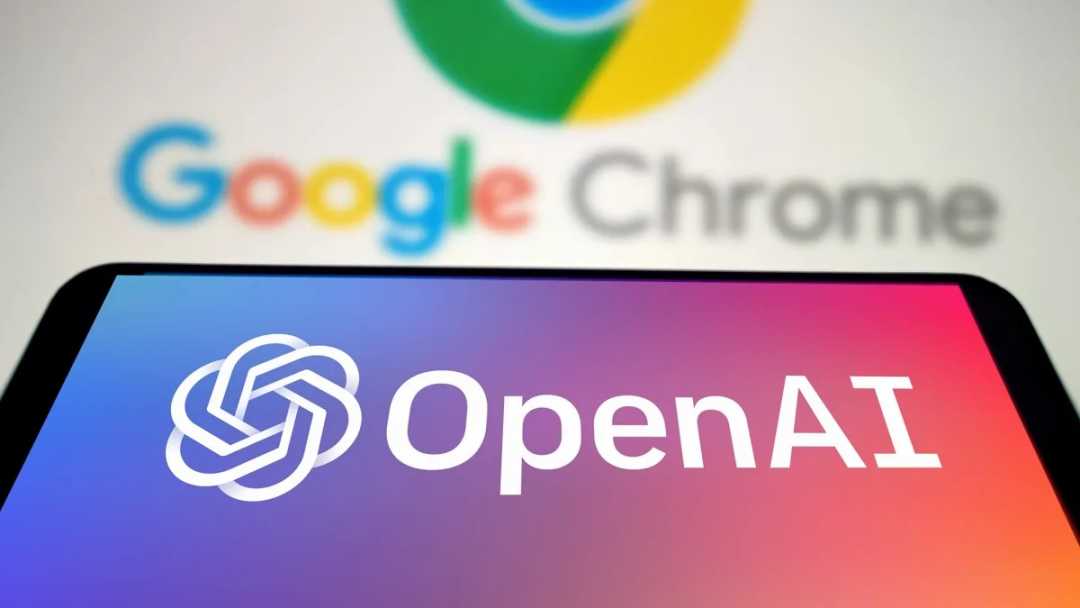
OpenAI is poised to disrupt the global browser market with its upcoming AI-powered browser, designed to challenge Google Chrome’s 65.94% market dominance and reshape how users interact with the web. Built on the Chromium framework—the same foundation as Chrome—the browser integrates ChatGPT-style conversational interfaces and AI agent capabilities, aiming to transform passive browsing into an interactive, task-driven experience.


The browser’s core innovation lies in its native integration of OpenAI’s Agent technology, including the upcoming Operator tool, which enables automated task execution like booking reservations, form filling, and data analysis directly within the interface. This "AI-first" design philosophy allows users to complete complex workflows without navigating between tabs, addressing a critical pain point in modern web usage. OpenAI has strategically recruited key members of Chrome’s original development team, including Ben Goodger and Darin Fisher, to ensure technical parity while introducing novel AI-driven features.


With 400 million weekly active ChatGPT users,OpenAI possesses a massive potential user base to jumpstart adoption. The browser’s launch comes at a pivotal moment: Google faces antitrust pressure over Chrome’s role in its search monopoly, while competitors like Perplexity’s Comet and Brave’s AI-enhanced browsers vie for market share9. OpenAI’s hybrid approach—combining closed-source AGI research with open-source Chromium—aims to balance innovation with compatibility, ensuring seamless access to existing websites and extensions.


Analysts note that the browser could significantly impact Google’s advertising revenue, as Chrome currently routes 75% of Alphabet’s search traffic and collects behavioral data for targeted ads. By keeping users within its AI-driven ecosystem, OpenAI stands to capture valuable interaction data to refine its models, creating a feedback loop that strengthens both its browser and ChatGPT offerings. This strategy mirrors Google’s historical use of Chrome to solidify its search dominance, but with AI as the differentiator.


However, challenges remain. Chrome’s entrenched user habits and Google’s ongoing investments in Gemini integration pose formidable barriers. OpenAI must also navigate regulatory scrutiny over data practices and ensure its browser complies with evolving AI ethics guidelines. Despite these hurdles, the browser’s launch marks a bold step toward OpenAI’s vision of embedding AI into every layer of digital life, from chatbots to core infrastructure. As the AI browser war intensifies, OpenAI’s move could redefine the internet’s power dynamics, shifting control from search giants to AI-first platforms.

Latest Stories
Sports News1 minute readThe Scalo Romana Olympic Village is set to welcome athletes for this winter’s games, having been completed in 900 days—one month ahead of schedule, according to Designboom. The milestone marks a key step in preparations for the Milano Cortina 2026 Winter Olympics.
Industry News2 minute readSan Francisco, July 21, 2025 — Apple Inc. has filed a high-stakes trade secret lawsuit in the Northern District of California against prominent tech YouTuber Jon Prosser and his associate Michael Ramacciotti, accusing the pair of accessing Apple employees' internal developer iPhones to leak confidential details about the unreleased iOS 26 operating system.
Feline News1 minute read[Nashville, July 18th] —— The Tennessee Rex, a uniquely American cat breed celebrated for its naturally curly fur, is gaining recognition among pet enthusiasts worldwide. This distinctive feline traces its origins to a chance discovery in 2004 in Tennessee, where a stray cat gave birth to a litter containing a kitten with unusually soft, curly hair—a natural genetic mutation that marked the breed's beginning.
Sports News1 minute readWith three years to go until the 2028 Los Angeles Olympics, the U.S. government and California lawmakers are ramping up preparations. On July 4, President Donald Trump signed H.R. 1, the "One Beautiful Act," allocating $1 billion to the Federal Emergency Management Agency (FEMA) for Olympic-related security, planning, and operational costs . This marks the largest federal investment in Olympic security since the 2002 Salt Lake City Games, reflecting concerns over potential threats and logistical complexities.
Feline News1 minute readThe Cheetoh cat, a relatively new and increasingly popular feline breed, has been turning heads in the pet world with its striking appearance and engaging personality. Developed in the early 2000s through the intentional crossbreeding of Bengal cats and Ocicats, the Cheetoh was crafted to combine the exotic spotted coat of wild felines with the gentle temperament of domesticated breeds.
Sci-Tech News1 minute readThe U.S. Department of Defense (DoD) announced on July 14 it has awarded up to $200 million in AI contracts to OpenAI, Google parent company Alphabet, Anthropic, and xAI, aiming to accelerate the deployment of advanced AI capabilities across national security systems. The contracts, managed by the DoD’s Chief Digital and AI Office (CDAO), will fund the development of "agentic AI workflows" to address critical defense challenges, including cybersecurity, intelligence analysis, and operational decision-making .
Industry News2 minute readNintendo has announced the second iteration of its Switch Online Playtest Program, opening applications on July 18th to 40,000 Switch Online + Expansion Pack members for a closed beta of an unannounced online service. This marks a significant expansion from the 10,000 participants in the 2024 trial, quadrupling the user base to gather broader feedback ahead of a potential full launch. The test will run from July 29th to August 11th, 2025, and supports both the current Nintendo Switch and the upcoming Switch 2, signaling strategic alignment with the next-gen console’s launch plans .