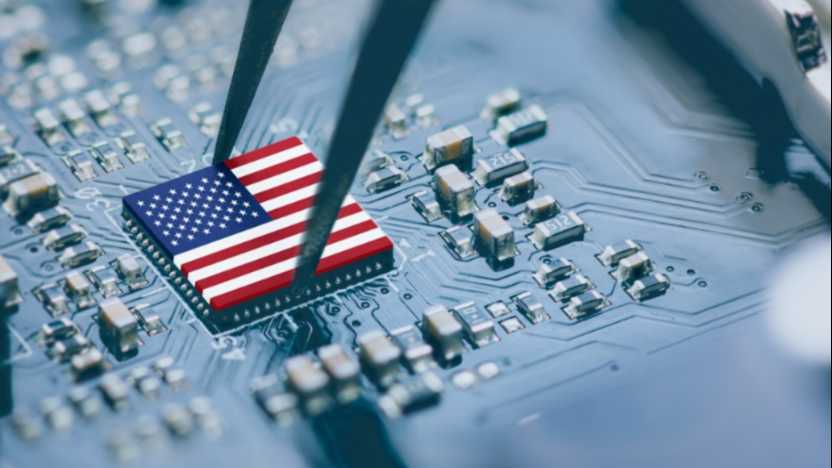
The U.S. Department of Commerce’s Bureau of Industry and Security (BIS) is planning to revoke "blanket exemptions" that allow TSMC, Samsung Electronics, and SK Hynix to use American technology in their Chinese mainland facilities without prior approval, The Wall Street Journal reported on June 20. If implemented, the move would force these companies to apply for individual licenses for U.S.-made semiconductor equipment shipments to China, with approval processes potentially dragging on for months and disrupting production upgrades and capacity expansion .
South Korean industry groups have raised alarms over the proposal, warning that Samsung and SK Hynix’s Chinese operations—deeply integrated into global supply chains—could face skyrocketing operational costs. Samsung’s Xi’an plant, for example, relies on U.S.-origin lithography tools for NAND flash production, while SK Hynix’s Wuxi facility depends on American metrology systems. A delay in equipment updates could set back their competitiveness against Micron and Kioxia in advanced memory markets .
Critics within the U.S. Department of Defense argue the policy would backfire by pushing firms toward Japanese and European equipment suppliers, inadvertently strengthening China’s domestic semiconductor ecosystem. China has already accelerated efforts to recruit foreign engineers and establish covert chip plants to bypass sanctions, as seen in its "Qiming" initiative to attract expertise from overseas . The Pentagon’s 2025 industrial capabilities report explicitly highlighted risks of overreliance on export controls that inadvertently subsidize China’s self-sufficiency drive .
The Commerce Department defended the plan as a bid to establish "reciprocal procedures," claiming it seeks parity with China’s licensing requirements for U.S. firms. A spokesperson denied accusations of escalating trade tensions, emphasizing the move aims to "enhance national security oversight" rather than restrict legitimate commerce . However, analysts noted the timing aligns with broader U.S.-China negotiations over rare earth exports and AI chip restrictions, suggesting the proposal may serve as a bargaining chip .
While the plan remains under review, Samsung and SK Hynix are reportedly evaluating alternatives, including sourcing from Tokyo Electron and ASML for lithography systems and adopting European-made process control tools. TSMC, meanwhile, has already adjusted its China strategy by limiting 16nm-and-below chip sales unless packaged by U.S.-approved OSATs, reflecting broader compliance challenges . The Semiconductor Industry Association has urged caution, warning that fragmented supply chains could raise global chip prices by 12-15% within two years .
The proposed policy underscores the growing intersection of technology and geopolitics, with U.S. allies increasingly caught in the crossfire. As China continues to invest $150 billion annually in domestic semiconductor R&D, experts caution that rushed policy shifts may inadvertently accelerate Beijing’s goal of achieving 70% chip self-sufficiency by 2030