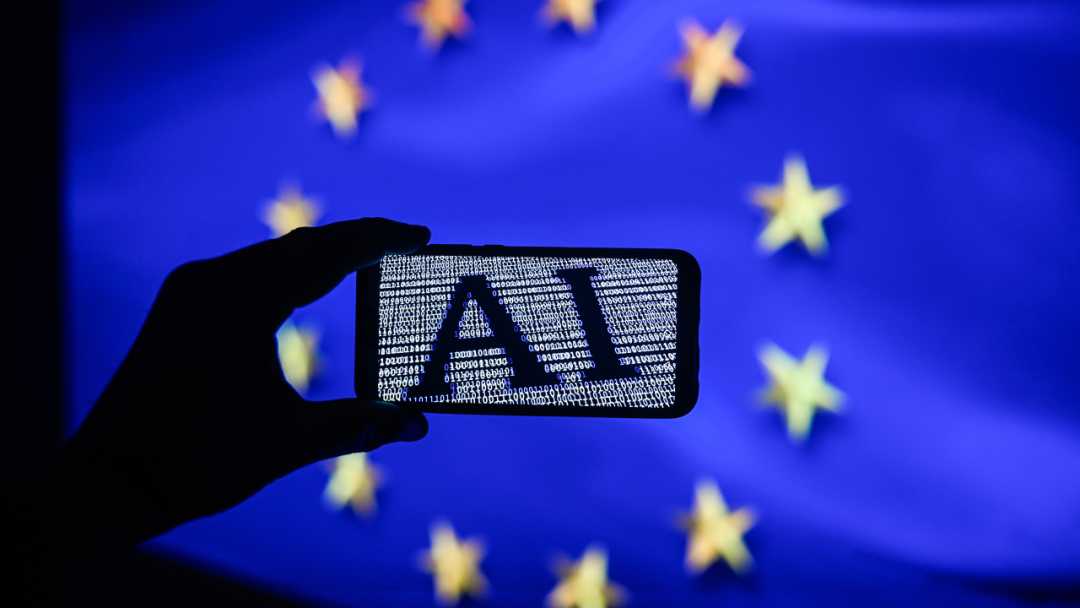
EU Unveils Final AI Code of Conduct to Guide Compliance with AI Act


Sci-Tech News
EU Unveils Final AI Code of Conduct to Guide Compliance with AI Act

The European Commission on July 10 released the final version of the General-Purpose AI Code of Conduct, a voluntary framework designed to help companies adhere to the EU’s landmark Artificial Intelligence Act (AI Act) set to take effect on August 2. The guidelines apply to mainstream generative AI models like ChatGPT, Gemini, Llama, and Grok, outlining requirements for transparency, copyright compliance, and systemic risk management.


Developed by a panel of 13 independent experts and incorporating input from over 1,000 stakeholders—including industry leaders, researchers, and civil society groups—the code focuses on three pillars: safety and security, transparency, and copyright. It mandates detailed disclosures about model architecture, training data sources, and energy consumption, while requiring developers to implement measures to respect EU copyright laws, such as honoring opt-out requests for web scraping and mitigating risks of generating infringing content16. For advanced models deemed "systemic risk," providers must establish continuous risk assessment frameworks and report incidents to the newly formed EU AI Office.


Compliance timelines vary based on model deployment dates. Existing AI systems built before August 2, 2025, have until August 2, 2027, to align with the rules, while models developed afterward must comply by August 2, 2026. The code’s voluntary nature allows companies to reduce administrative burdens while gaining legal certainty, though non-compliant firms risk lacking regulatory clarity.


Despite requiring formal approval from EU member states and the Commission (expected by late 2025), the code reflects the bloc’s commitment to balancing innovation with accountability. The EU’s stance contrasts with recent industry pushback: in July, over 45 European tech giants, including Airbus and Siemens, sought a two-year delay on the AI Act, which the Commission swiftly rejected. Microsoft, however, has signaled alignment, with President Brad Smith emphasizing the company’s reliance on European trust amid regulatory shifts.


The code marks a critical step toward operationalizing the AI Act, which categorizes AI systems by risk levels and imposes strict oversight on high-impact applications. While transparency and copyright rules apply to all general-purpose AI providers, safety protocols target advanced models like OpenAI’s ChatGPT and Google’s Gemini, reflecting their potential societal impact. As the global AI landscape evolves, the EU’s approach—combining stakeholder collaboration with regulatory rigor—could set a benchmark for responsible AI governance worldwide....
Latest Stories
Travel News2 minute readPerched above the rolling vineyards of Solutré-Pouilly in southern Burgundy, France, the Roche de Solutré stands as a testament to nature’s artistry and humanity’s ancient legacy. This 493-meter limestone monolith, designated a "Grand Site de France," dominates the landscape with its dramatic cliffs, while its slopes cradle some of Burgundy’s most revered vineyards.
Sports News1 minute readThe UK government announced on Saturday its support for London’s bid to host the 2029 Athletics World Championships, leveraging its rich experience in hosting top-tier sports events to bring the elite competition back to the iconic Olympic Stadium.
Feline News1 minute readThe Ukrainian Levkoy, a distinctive cat breed hailing from Ukraine, has garnered attention worldwide for its striking appearance and gentle demeanor. Developed through selective breeding efforts in the early 2000s, this breed is a result of crossing the Donskoy (a hairless breed) with the Scottish Fold, resulting in a one-of-a-kind combination of traits.
Industry News1 minute readThe Office of the United States Trade Representative (USTR) announced the initiation of a Section 301 investigation into Brazil. The probe will examine whether Brazil’s policies and practices in areas such as digital trade, electronic payment services, "unfair" preferential tariffs, intellectual property protection, ethanol market access, and deforestation-related measures negatively impact U.S. trade interests.
Sports News1 minute readWith three years to go until the 2028 Los Angeles Olympics, the U.S. government and California lawmakers are ramping up preparations. On July 4, President Donald Trump signed H.R. 1, the "One Beautiful Act," allocating $1 billion to the Federal Emergency Management Agency (FEMA) for Olympic-related security, planning, and operational costs . This marks the largest federal investment in Olympic security since the 2002 Salt Lake City Games, reflecting concerns over potential threats and logistical complexities.
Industry News1 minute readMicrosoft and the U.S. Idaho National Laboratory (INL) announced a partnership on July 16 to use AI in new nuclear plant licensing, aiming to drastically shorten the process. The move responds to Trump’s executive order to cut nuclear licensing to 18 months, addressing growing energy demands from AI data centers.
Feline News1 minute readRecent market analysis reveals that Bambino, a leading brand specializing in toddler care products, has witnessed a 35% year-on-year growth in international sales, solidifying its position as a key player in the global children's goods industry.