Hong Kong Unveils Ambitious Digital Asset Policy 2.0 to Lead Global Race


Sci-Tech News
Hong Kong Unveils Ambitious Digital Asset Policy 2.0 to Lead Global Race

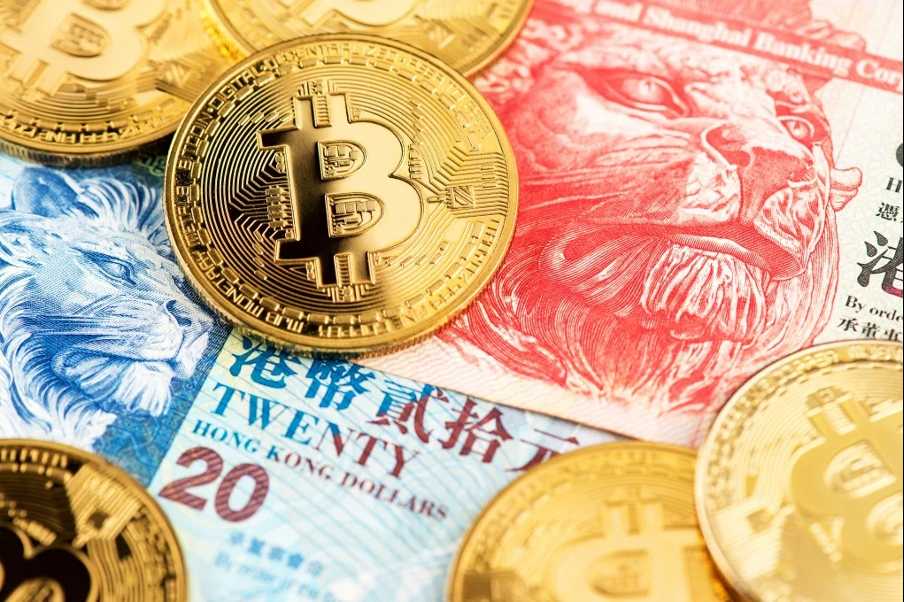
Hong Kong has launched its Digital Asset Policy Statement 2.0, marking a pivotal upgrade from its 2022 predecessor to solidify its position as a global leader in digital assets. The June 27 announcement emphasizes stablecoin regulation and asset tokenization as core priorities, aligning with the U.S. Senate’s recent passage of the Genius Act to regulate stablecoins, signaling intensified global competition in this burgeoning sector.


The LEAP framework outlines concrete measures, including a unified licensing regime for stablecoin issuers and a regulatory sandbox to test tokenized assets like green bonds and renewable energy projects. Under the Stablecoin Ordinance set to take effect August 1, issuers must maintain 100% reserve coverage with segregated assets held in trust, ensuring transparency and financial stability. For instance, entities like JD CoinChain and Standard Chartered are already testing compliant stablecoins for cross-border payments and supply chain finance. HashKey Group Chairman Xiao Feng noted Hong Kong’s shift from a "testing ground" to an institutionalized, scalable ecosystem, attracting global players.


The policy also aims to capitalize on the trillion-dollar potential of asset tokenization, with Hong Kong planning to regularize tokenized government bond issuances and expand into sectors like gold and solar energy. The city’s Cyberport has launched a HK$500,000 grant program for blockchain startups, fostering innovation in areas such as real estate and carbon credits. Analysts project the tokenized real-world assets (RWA) market could reach $18.9 trillion by 2033, with Hong Kong positioned to capture a significant share due to its robust infrastructure and policy support.


Meanwhile, the U.S. Genius Act imposes stringent reserve requirements for stablecoins exceeding $10 billion in market cap, mandating low-risk assets like U.S. Treasuries and subjecting issuers to dual oversight by the Federal Reserve and OCC. This contrasts with Hong Kong’s more flexible approach, which allows multi-currency pegs (e.g., HKD/USD) and facilitates cross-border collaboration. While both jurisdictions prioritize anti-money laundering (AML) standards, the U.S. seeks to reinforce dollar dominance, whereas Hong Kong leverages its role as a bridge between East and West to promote multi-currency stability.


Global stakeholders are closely watching these divergent strategies. Hong Kong’s "regulatory sandbox + innovation" model contrasts with the U.S.’s "compliance-first" stance, creating two distinct regulatory paradigms. However, both emphasize investor protection and financial integrity, with Hong Kong aligning with international standards like FATF guidelines. As stablecoins and tokenized assets reshape financial systems, experts warn of rising compliance costs and market fragmentation, urging regulators to foster interoperability. The race to define global standards has begun, with Hong Kong and the U.S. emerging as key contenders in this high-stakes competition.

Latest Stories
Industry News1 minute readForeign media reported on July 15 that the European Commission has formally withdrawn its plan to impose a digital tax on major tech companies during the latest budget negotiations. The decision is seen as a key compromise in EU-U.S. trade talks, temporarily relieving U.S. tech giants like Apple and Meta from heavy tax pressures, while the EU paves the way for broader trade agreements by adjusting its fiscal strategy.
Sports News2 minute readThe International Olympic Committee (IOC) has announced the selection of seven research projects for the 11th edition of the Advanced Olympic Research Grant Programme, which is managed by the IOC’s Olympic Studies Centre (OSC). The chosen projects were selected for their academic quality and relevance to the IOC’s defined priority research areas for the Olympic Movement.
Beauty News1 minute readMadrid-born freelance model Clara López, 27, has gained viral attention with a set of candid life photos captured across Barcelona’s cobblestone streets. The unposed series, shot by photographer friend Lucas Martínez, highlights López’s effortless elegance in everyday moments—from sipping coffee at a sidewalk café to browsing a vintage bookstore. Her 175cm frame, dressed in high-waisted jeans and oversized knit sweaters, blends seamlessly with the city’s bohemian vibe.
Travel News1 minute readPerched atop a hill in the Burgundy region of France, the medieval town of Vézelay is home to the Basilica Sainte-Marie-Madeleine. This architectural masterpiece, blending Romanesque and Gothic styles, holds a pivotal place in history as the spiritual launchpad of the Second Crusade in 1147.
Industry News1 minute readSAO PAULO, Brazil, June 25 (News Wire) – Brazil's retail sector staged a recovery in May, with foot traffic at physical stores rising 1.86% year-on-year, marking a significant turnaround from April's 3.99% decline. This rebound was primarily fueled by a robust 3.8% surge in street commerce, according to Seed Digital's Retail Purchase Intent Index (IICV Seed).
Travel News2 minute readPerched above the rolling vineyards of Solutré-Pouilly in southern Burgundy, France, the Roche de Solutré stands as a testament to nature’s artistry and humanity’s ancient legacy. This 493-meter limestone monolith, designated a "Grand Site de France," dominates the landscape with its dramatic cliffs, while its slopes cradle some of Burgundy’s most revered vineyards.
Beauty News2 minute readBerlin-based amateur model Lena Schmidt, 26, takes the spotlight in Issue 174, with a series of posed yet natural photos capturing her in everyday Berlin settings. Shot by photographer Kai Berger, the collection balances intentionality and ease—Schmidt poses in her apartment’s sunlit kitchen, outside a historic bookstore, and along a tree-lined canal, each stance styled but never stiff.