Peru's Mysterious Geoglyphs Abound


Cultural News
Peru's Mysterious Geoglyphs Abound

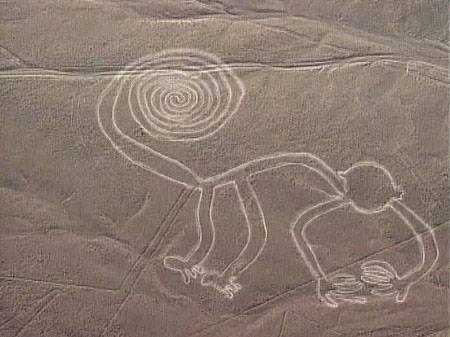
In the vast and arid Nazca desert of southern Peru, a remarkable phenomenon has intrigued the world for decades - an abundance of strange and mysterious geoglyphs. These geoglyphs, known as the Nazca Lines, were created between 500 BC and 500 AD. The local people made them by making depressions or shallow incisions in the desert floor, removing pebbles and exposing different - colored dirt.


There are two main phases in the creation of these lines. The Paracas phase, from 400 to 200 BC, and the Nazca phase, from 200 BC to 500 AD. In recent years, with the help of modern technology such as drones, between 80 and 100 new figures have been discovered. Archaeologists are confident that there are still more hidden among the desert sands.


The lines are incredibly diverse. While most run straight across the landscape, there are also elaborate figurative designs of animals like hummingbirds, spiders, fish, condors, monkeys, and plants. The combined length of all the lines exceeds 1,300 km (800 mi), covering an area of about 50 km² (19 sq mi). Some of these shapes are best seen from the air, at around 500 m (1,600 ft), although they can also be glimpsed from the surrounding foothills. Scholars have long debated the purpose of these designs, but many believe they held religious significance for the ancient people who created them. In 1994, the Nazca Lines were designated as a UNESCO World Heritage Site, highlighting their global importance and mystery.

Latest Stories
Industry News1 minute readForeign media reported on July 15 that the European Commission has formally withdrawn its plan to impose a digital tax on major tech companies during the latest budget negotiations. The decision is seen as a key compromise in EU-U.S. trade talks, temporarily relieving U.S. tech giants like Apple and Meta from heavy tax pressures, while the EU paves the way for broader trade agreements by adjusting its fiscal strategy.
Sports News2 minute readThe International Olympic Committee (IOC) has announced the selection of seven research projects for the 11th edition of the Advanced Olympic Research Grant Programme, which is managed by the IOC’s Olympic Studies Centre (OSC). The chosen projects were selected for their academic quality and relevance to the IOC’s defined priority research areas for the Olympic Movement.
Beauty News1 minute readMadrid-born freelance model Clara López, 27, has gained viral attention with a set of candid life photos captured across Barcelona’s cobblestone streets. The unposed series, shot by photographer friend Lucas Martínez, highlights López’s effortless elegance in everyday moments—from sipping coffee at a sidewalk café to browsing a vintage bookstore. Her 175cm frame, dressed in high-waisted jeans and oversized knit sweaters, blends seamlessly with the city’s bohemian vibe.
Travel News1 minute readPerched atop a hill in the Burgundy region of France, the medieval town of Vézelay is home to the Basilica Sainte-Marie-Madeleine. This architectural masterpiece, blending Romanesque and Gothic styles, holds a pivotal place in history as the spiritual launchpad of the Second Crusade in 1147.
Industry News1 minute readSAO PAULO, Brazil, June 25 (News Wire) – Brazil's retail sector staged a recovery in May, with foot traffic at physical stores rising 1.86% year-on-year, marking a significant turnaround from April's 3.99% decline. This rebound was primarily fueled by a robust 3.8% surge in street commerce, according to Seed Digital's Retail Purchase Intent Index (IICV Seed).
Travel News2 minute readPerched above the rolling vineyards of Solutré-Pouilly in southern Burgundy, France, the Roche de Solutré stands as a testament to nature’s artistry and humanity’s ancient legacy. This 493-meter limestone monolith, designated a "Grand Site de France," dominates the landscape with its dramatic cliffs, while its slopes cradle some of Burgundy’s most revered vineyards.
Beauty News2 minute readBerlin-based amateur model Lena Schmidt, 26, takes the spotlight in Issue 174, with a series of posed yet natural photos capturing her in everyday Berlin settings. Shot by photographer Kai Berger, the collection balances intentionality and ease—Schmidt poses in her apartment’s sunlit kitchen, outside a historic bookstore, and along a tree-lined canal, each stance styled but never stiff.