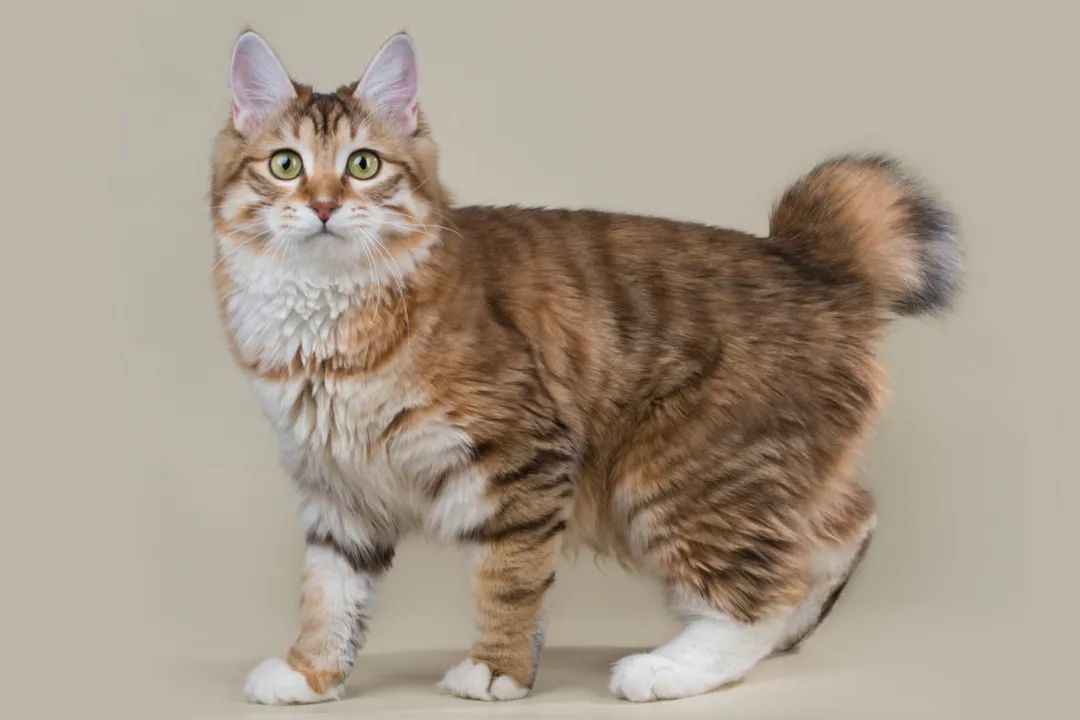
The Kurilian Bobtail, a captivating feline breed hailing from Russia's Sakhalin Island and the Kuril Archipelago, has gained international attention for its unique bobbed tail and resilient character. Shaped by centuries of natural selection in the harsh volcanic landscapes, these cats embody the rugged beauty of their island home.
Origins and History
With roots tracing back over 200 years, the Kurilian Bobtail first emerged on the Kuril Islands, a volcanic chain where their existence was documented by Russian settlers and scientists. Despite its name, genetic studies suggest ties to Japanese Hokkaido cats, reflecting the region's complex geopolitical history. Valued for their rodent-control skills, these cats accompanied fishermen and researchers, eventually spreading to mainland Russia in the mid-20th century. They achieved Championship Status with The International Cat Association (TICA) in 2012, solidifying their global recognition.
Physical Characteristics
Medium to large in size, Kurilian Bobtails are muscular and robust, with males weighing up to 15 lbs (6.8 kg). Their most distinctive feature is the plush, pom-pom-like tail, unique to each individual, which results from a natural genetic mutation. Coats come in short or semi-long varieties, dense and water-resistant to withstand extreme cold. Coat colors range from tabby to tortoiseshell, complemented by striking amber or green eyes that exude both wildness and warmth.
Temperament and Behavior
A product of natural evolution, Kurilian Bobtails balance independence with affection. Intelligent and active, they love scaling heights to observe their surroundings while seeking human interaction, often displaying dog-like loyalty—following owners or curling up for cuddles. These cats thrive in multi-pet households, showing patience with children and tolerance toward other animals, though they may bond deeply with one family member. Their curiosity and trainability make them adept at learning tricks, adding to their charm.
Health and Care
Renowned for their hardiness, Kurilian Bobtails enjoy a lifespan of 15–20 years, free from major genetic disorders. Regular veterinary check-ups, dental care, and a protein-rich diet (preferably fish-based) are essential. Some individuals show a preference for running water, a trait linked to their hunting instincts. Weekly grooming helps manage shedding, while interactive toys and climbing structures keep their agile minds stimulated.
Global Status and Conservation
While popular in Russia, Japan, and Europe, the Kurilian Bobtail remains rare in North America, with fewer than 100 registered cats in the U.S.. International breeding programs aim to preserve their genetic diversity, drawing attention to their unique evolutionary adaptations. Scientific interest in their bobtail genetics further highlights their significance in feline biology research.
From the stormy shores of the Kuril Islands to global households, the Kurilian Bobtail stands as a testament to nature's artistry. This "spirit of the volcanic archipelago" continues to enchant cat lovers worldwide, blending wild allure with gentle companionship.