WADA Unveils Stricter New Policy on Therapeutic Use Exemptions (TUEs)


Sports News
WADA Unveils Stricter New Policy on Therapeutic Use Exemptions (TUEs)

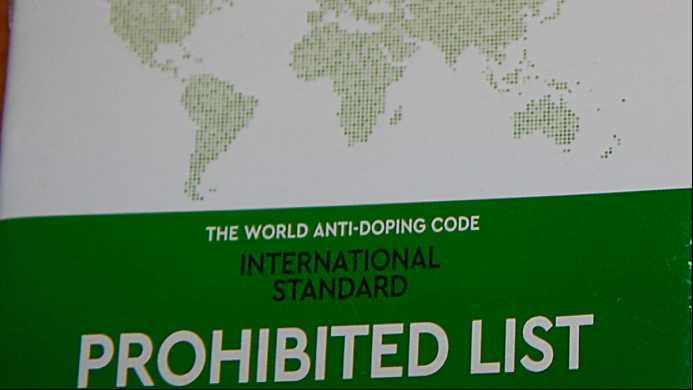
This week, the World Anti-Doping Agency (WADA) has released a more stringent new policy on Therapeutic Use Exemptions (TUEs), aiming to regulate the use of prohibited substances in sports, prevent abuse, and ensure fairness. The policy covers various aspects, including the use of human growth hormone.


The latest TUE guidelines issued by WADA introduce clearer criteria to prevent abuse, strengthen anti-doping supervision, and ensure that TUEs are only approved when there is a legitimate medical need. To ensure the consistent application of TUEs and avoid arbitrary interpretations, WADA has collaborated with international experts to formulate the guidelines, providing a strict technical framework for doctors and testing committees.


Based on the best available scientific evidence, these guidelines are designed to address common issues and offer clear standards for complex cases that require a uniform approach. One of the key issues addressed in the newly released guidelines is the use of human growth hormone (hGH) by short-statured athletes who do not have a growth hormone deficiency.


WADA has worked with a panel consisting of top endocrinologists and a sports medicine expert to determine that only athletes whose height is below 2.25 standard deviations on the growth curve will be approved for a TUE. In addition, the treatment can only continue until the athlete reaches the 5th percentile of adult height. Once this height is reached, the treatment will no longer be considered medically necessary and will thus no longer be permitted.


An article in The Journal of Clinical Endocrinology & Metabolism supports this updated guideline, elaborating on the scientific basis and the development process of these standards. These documents are important tools in the field of medical anti-doping, providing structured information to help experts accurately assess TUE applications and ensuring that decisions are fair and evidence-based.


Through this update, WADA reaffirms its commitment to the harmonization of the global anti-doping system and its determination to ensure that medical treatments in sports are only used for genuine medical needs and not as a disguised means to enhance performance.
Latest Stories
Travel News2 minute readPerched above the rolling vineyards of Solutré-Pouilly in southern Burgundy, France, the Roche de Solutré stands as a testament to nature’s artistry and humanity’s ancient legacy. This 493-meter limestone monolith, designated a "Grand Site de France," dominates the landscape with its dramatic cliffs, while its slopes cradle some of Burgundy’s most revered vineyards.
Sports News1 minute readThe UK government announced on Saturday its support for London’s bid to host the 2029 Athletics World Championships, leveraging its rich experience in hosting top-tier sports events to bring the elite competition back to the iconic Olympic Stadium.
Feline News1 minute readThe Ukrainian Levkoy, a distinctive cat breed hailing from Ukraine, has garnered attention worldwide for its striking appearance and gentle demeanor. Developed through selective breeding efforts in the early 2000s, this breed is a result of crossing the Donskoy (a hairless breed) with the Scottish Fold, resulting in a one-of-a-kind combination of traits.
Industry News1 minute readThe Office of the United States Trade Representative (USTR) announced the initiation of a Section 301 investigation into Brazil. The probe will examine whether Brazil’s policies and practices in areas such as digital trade, electronic payment services, "unfair" preferential tariffs, intellectual property protection, ethanol market access, and deforestation-related measures negatively impact U.S. trade interests.
Sports News1 minute readWith three years to go until the 2028 Los Angeles Olympics, the U.S. government and California lawmakers are ramping up preparations. On July 4, President Donald Trump signed H.R. 1, the "One Beautiful Act," allocating $1 billion to the Federal Emergency Management Agency (FEMA) for Olympic-related security, planning, and operational costs . This marks the largest federal investment in Olympic security since the 2002 Salt Lake City Games, reflecting concerns over potential threats and logistical complexities.
Industry News1 minute readMicrosoft and the U.S. Idaho National Laboratory (INL) announced a partnership on July 16 to use AI in new nuclear plant licensing, aiming to drastically shorten the process. The move responds to Trump’s executive order to cut nuclear licensing to 18 months, addressing growing energy demands from AI data centers.
Feline News1 minute readRecent market analysis reveals that Bambino, a leading brand specializing in toddler care products, has witnessed a 35% year-on-year growth in international sales, solidifying its position as a key player in the global children's goods industry.